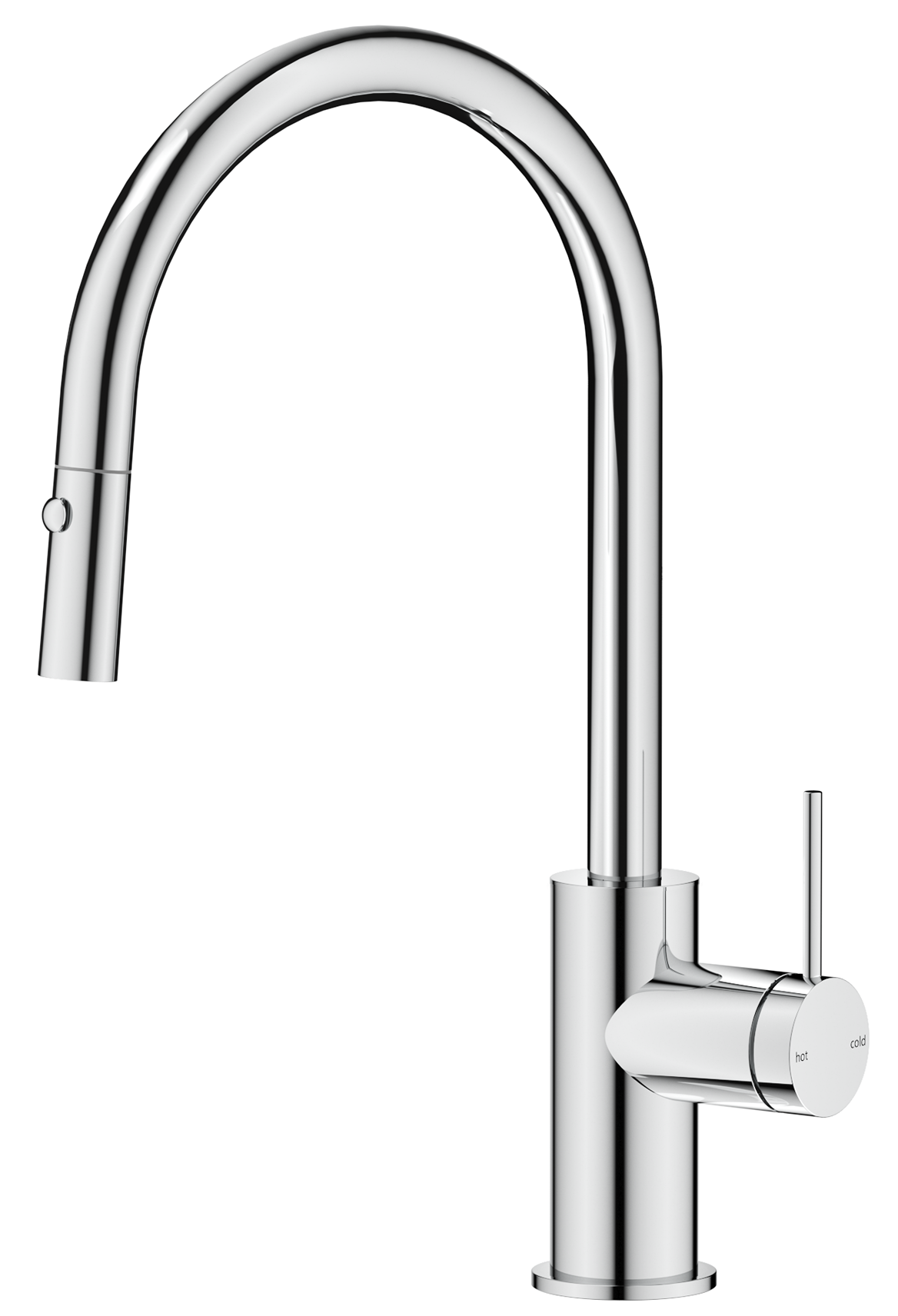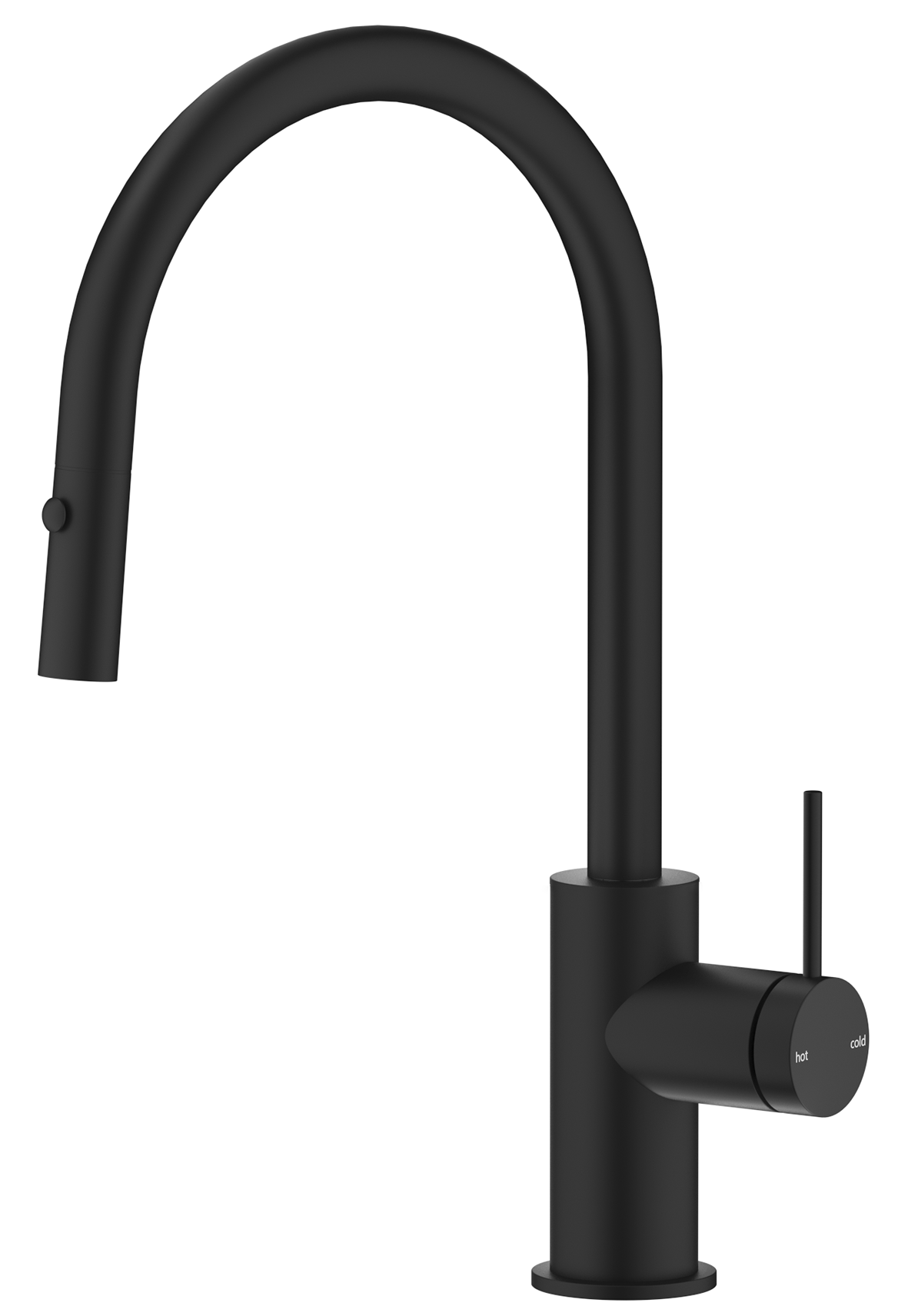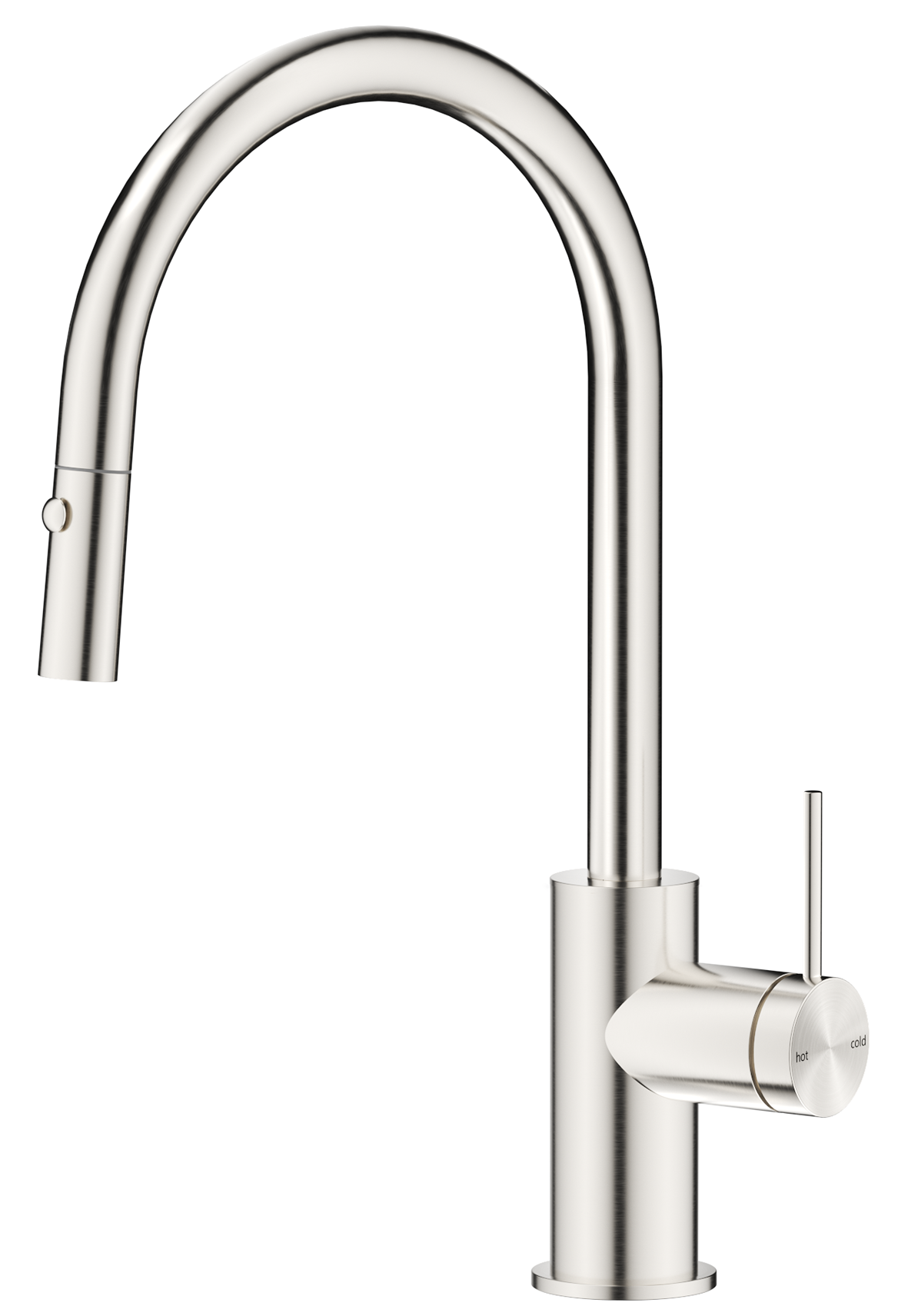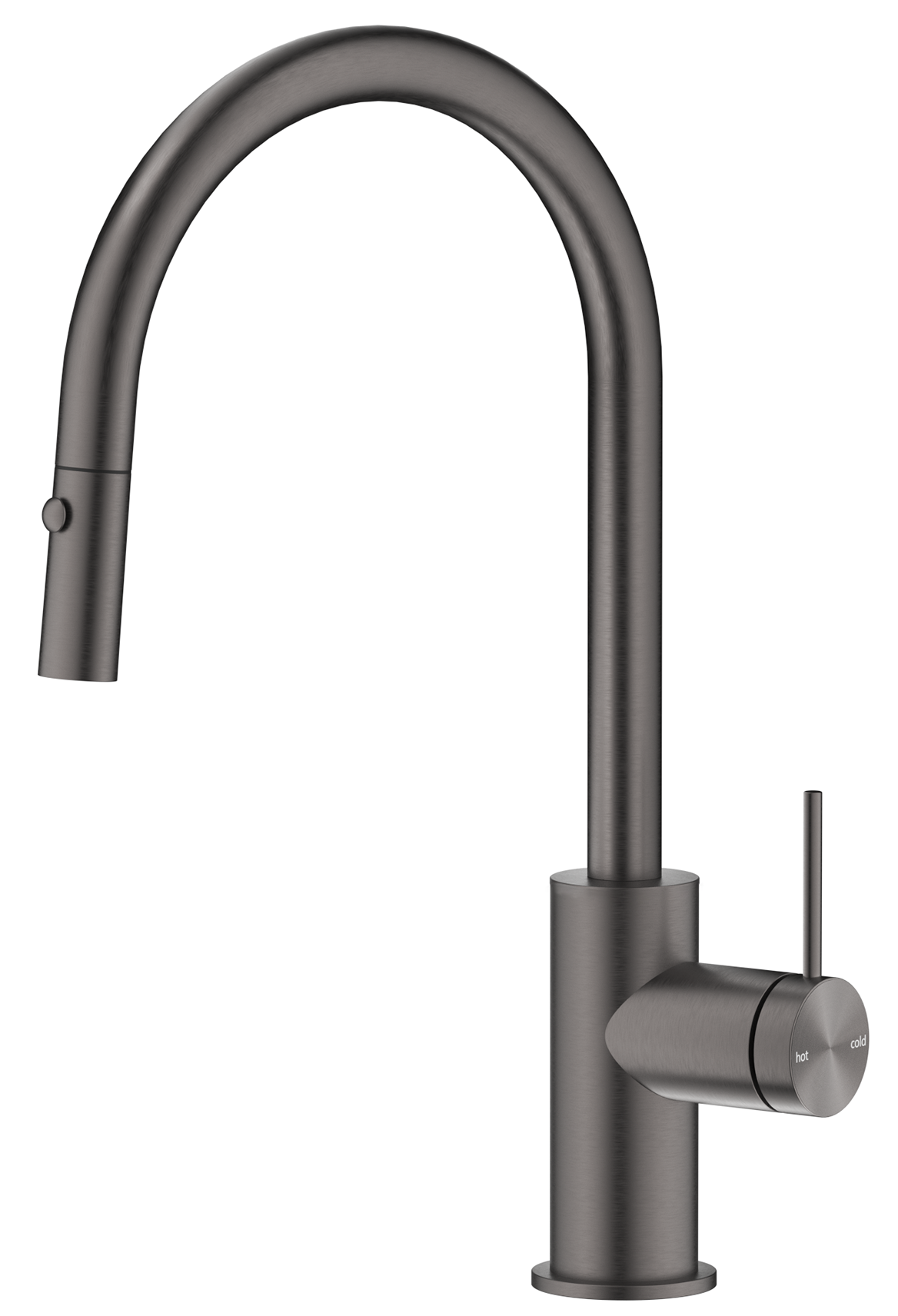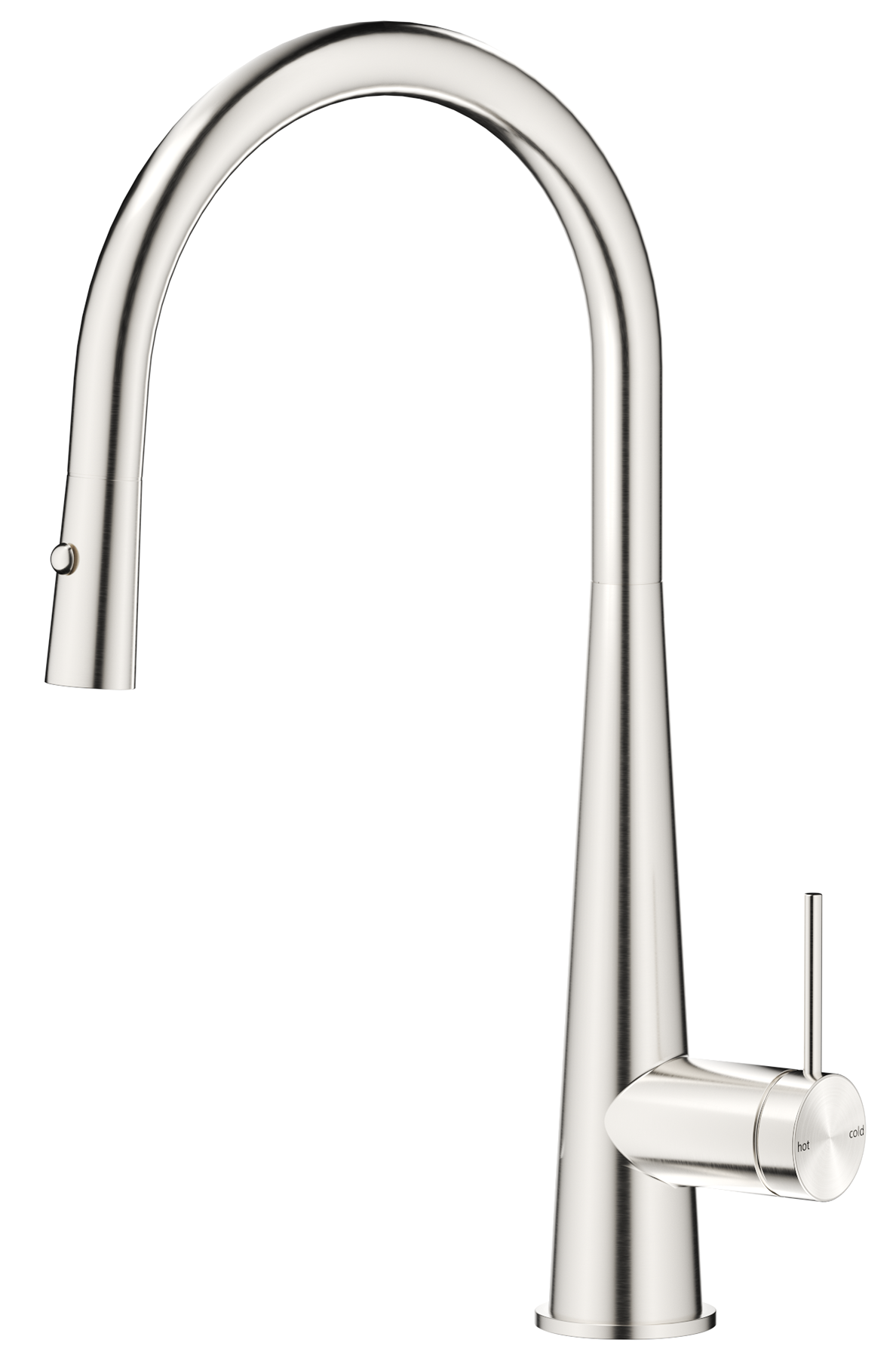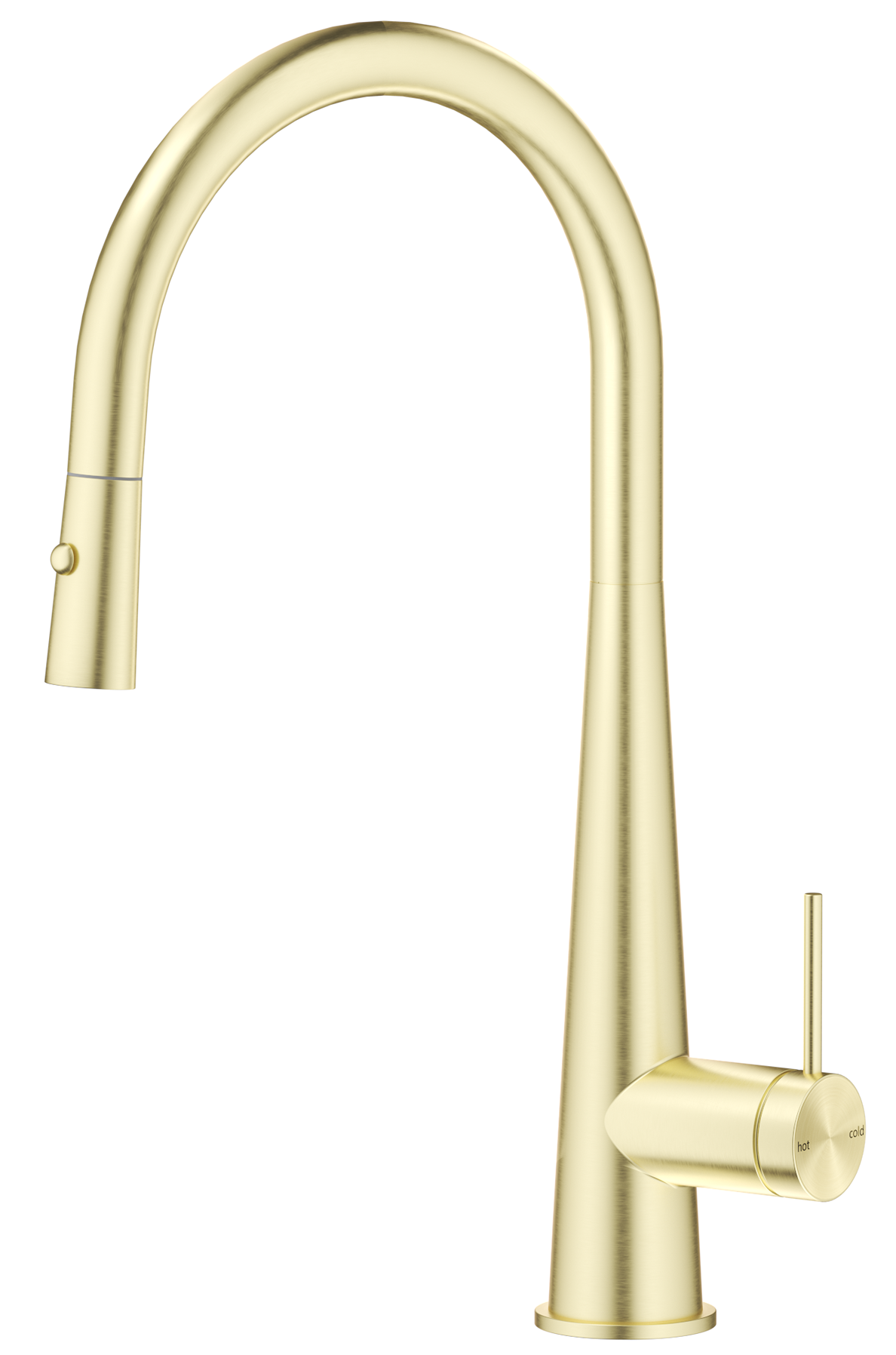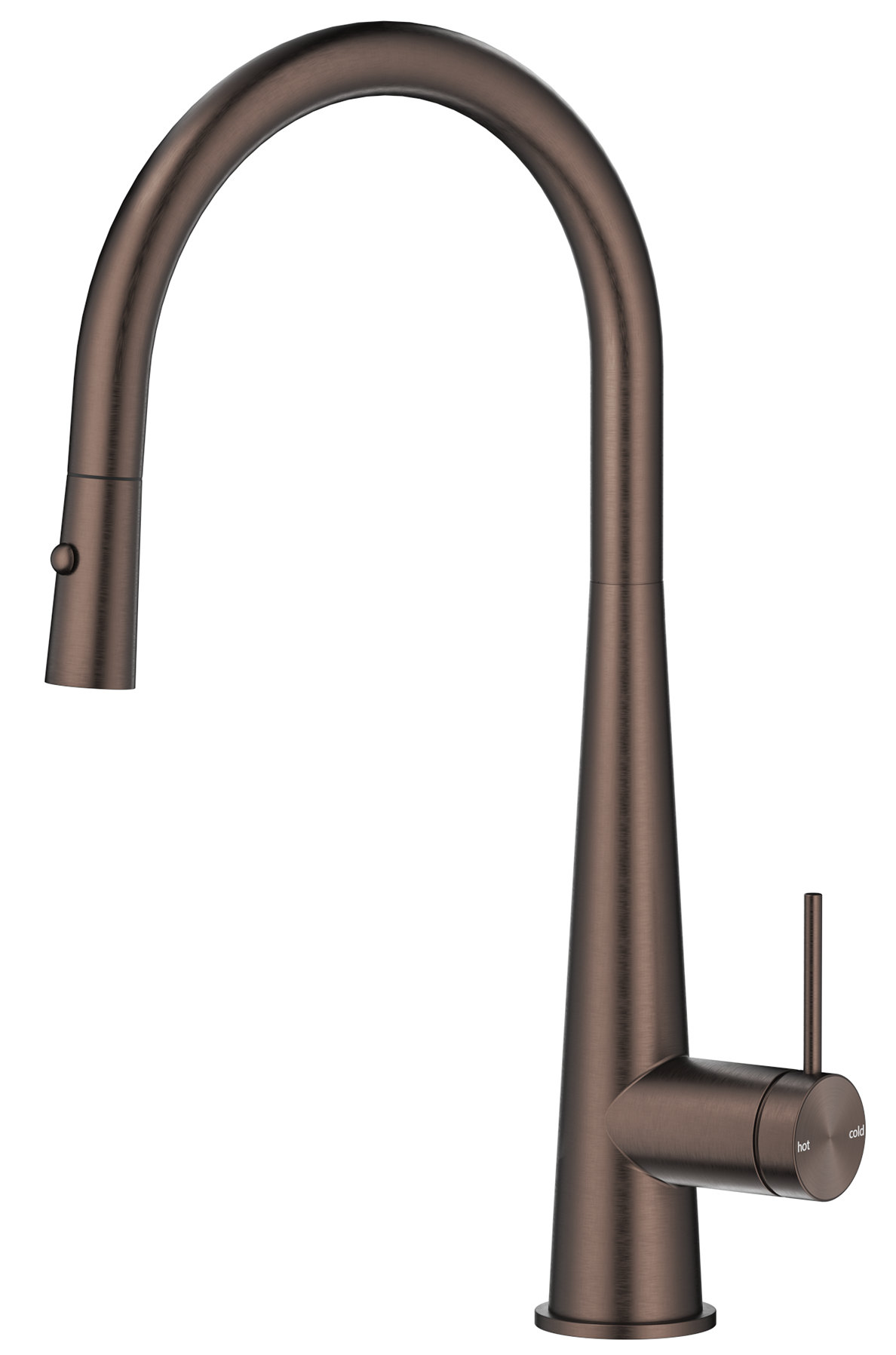






Brushed nickel is one of the most requested finishes across Australian kitchens, bathrooms and laundries, and for good reason. It strikes a balance between warmth and restraint that few other metallic finishes manage. Whether you’re a homeowner choosing tapware for a renovation or a designer specifying fittings for a new build, understanding this finish will help you make confident design decisions.
What Is Brushed Nickel?
Brushed nickel is a metal finish with a softly textured, muted appearance. Unlike polished chrome, it doesn’t produce a sharp mirror-like reflection. Instead, it has a quiet, satin quality created by brushing fine lines across the surface during manufacturing. The word ‘brushed’ refers to this surface treatment, not the product’s shape or style.
You’ll find it across basin mixers, sink mixers, shower rails, bath spouts, heated towel rails and accessories. It appeals to buyers who want something timeless, versatile, and practical for everyday living. Our Beki Basin Mixer is a good example of a clean, modern piece that works in almost any interior, while the Mica Fluted Basin Mixer brings more textural detail for a vanity focal point.

What Colour Is Brushed Nickel?
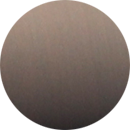
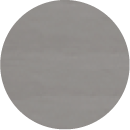
Think of a soft metallic silver with a slight warm grey undertone. It’s muted rather than bright, sitting somewhere between chrome and stainless steel on the visual spectrum. Under warm lighting, it can take on a faintly creamy or taupe quality. In cooler spaces, it reads closer to a soft silver-grey.
How it looks shifts depending on surrounding materials:
- With white tiles: clean and subtle
- With natural stone: warm and elegant
- With timber cabinetry: balanced and inviting
- With darker joinery: architectural and refined
Is Brushed Nickel a Warm or Cool Colour?
It’s generally considered a warm leaning neutral. But its strength lies in being balanced rather than strongly warm or cool, which makes it easy to integrate across design schemes: coastal, contemporary, Hamptons, transitional and minimalist spaces all work. If a room feels too stark with chrome, brushed nickel softens the result without losing a clean metallic edge. The Mica Heritage Gooseneck Sink Mixer in brushed nickel is a strong example of this warmth applied to a timeless kitchen silhouette.
What Is a Brushed Nickel Finish?
The finish is produced by treating the metal surface to create fine directional texture and a satin-like look. It sits in the space between high-gloss and flat matte, offering lower shine, softened reflection, and more visual depth than either extreme.
Compared to polished chrome, it’s less reflective. Compared to matte black or other flat finishes, it retains a gentle lustre. This matters in daily life because the brushed surface helps disguise fingerprints and softens the appearance of water spots, keeping fittings looking good between cleans.
A quick comparison:
- Brushed nickel: soft, textured, low sheen
- Chrome: bright, crisp, reflective
- Stainless steel: practical, industrial-leaning, varies by grade
What Is Brushed Nickel Made Of?
Brushed nickel typically refers to a nickel-based plated or coated finish applied over a base material. It’s not usually a solid piece of pure nickel. The exact construction varies by product type and manufacturer, but what you see and touch is a genuine metal finish, not simply a paint colour or a printed effect.
Quality depends on the engineering behind the product, the substrate material, manufacturing standards and quality control. Bella Vista’s brushed nickel tapware is Australian-designed and crafted with rigour, with hands-on quality control applied both locally and with manufacturing partners.
Is Brushed Nickel Real Nickel?
Nickel is part of the finish, but brushed nickel products aren’t made from solid nickel. Most people asking this question want to know whether the finish is authentic metal or just a colour label. The answer: it’s a real metal finish, not an imitation.
Brushed Nickel vs Stainless Steel
| Feature | Brushed Nickel | Stainless Steel |
| Appearance | Warm, decorative, refined | Cooler, more utilitarian |
| Undertone | Warm grey to soft silver | Cooler silver-grey |
| Surface sheen | Low, satin-like | Varies by grade and treatment |
| Typical use | Tapware, accessories, hardware | Sinks, appliances, commercial fittings |
| Fingerprint visibility | Lower | Moderate to higher |
| Design feel | Design-led, refined | Practical, industrial |
Neither is universally better. Brushed nickel tends to be chosen for its warmer, more considered appearance, while stainless steel suits applications where a technical or commercial look is preferred.
What Colours Go With Brushed Nickel?

Brushed nickel pairs easily with a wide palette:
- Whites and off-whites for a crisp, softer result than chrome
- Greys and stone tones for layered, calm interiors
- Natural timber and oak for warmth and balance
- Charcoal and black accents for contrast without harshness
- Blues and green-greys for coastal and Hamptons schemes
- Marble and travertine for understated luxury
Consistency matters. Repeating brushed nickel through kitchen tapware, shower fittings and bathroom accessories ties a space together with a cohesive metallic thread.
Why It Works So Well in Australian Homes
Australian interiors tend to favour natural light, stone, tile and timber. Brushed nickel complements all of these. It offers a premium feel without the sharp reflectivity of chrome and it’s forgiving in high-use areas. Spaces where it performs well include family bathrooms, ensuite vanities, kitchens with natural materials, and laundries.
Caring for Brushed Nickel
- Wipe regularly with a soft cloth
- Use mild soap and water for deeper cleaning
- Dry after cleaning to reduce spotting
- Avoid abrasive cleaners, scourers and harsh chemicals
- Always follow manufacturer care instructions
Brushed nickel is durable and relatively easy to maintain. Long-term appearance depends on environment, usage and cleaning habits. Harsh chemicals and abrasive pads will shorten the life of any decorative finish, regardless of quality.
FAQ’s
What colour does brushed nickel look like?
A soft silver-grey with gentle warm undertones and a muted metallic finish.
What is another name for brushed nickel?
Satin nickel is the closest comparable term, though it’s typically smoother and less visibly textured.
What is closest to brushed nickel?
Satin nickel is the nearest match, followed by some stainless steel finishes and softer gunmetal tones, though each differs in undertone and how it reflects light.
Does brushed nickel tarnish easily?
Brushed nickel is resistant to tarnishing under normal conditions, especially with regular cleaning using mild soap and a soft cloth. Exposure to harsh chemicals or prolonged moisture without drying can accelerate discolouration over time.